Ruben Bernstein
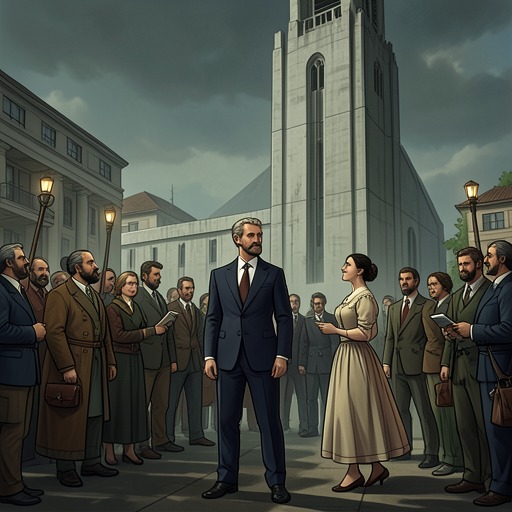
A Killer’s MindRuben Bernstein is an experienced profiler whose confident account of the Chicago Strangling Undertaker murders initially steers investigators toward searching funeral-home records. His authority is then challenged by Zoe Bentley, who argues that the physical evidence contradicts his profile. Bernstein’s brief but consequential role tests the difference between an expert-sounding explanation and a hypothesis that fits the case.
Identity and Introduction
Bernstein joins the Chicago Police Department task force three days after the second body is discovered. Lieutenant Martinez introduces him to Tatum Gray as an experienced profiler and says he has already been a tremendous help. The task force’s situation room, with case images and timelines on its walls and a Chicago map marked at two locations, gives his work an institutional setting: his opinions are being considered amid an active investigation, not offered merely as television commentary.
Zoe Bentley has encountered Bernstein before through his frequent appearances on television whenever a serial killer attracts public attention. She recognizes him when she arrives for a meeting with Lieutenant Martinez and Tatum Gray, and views him as part of a group of self-styled experts who publicize their knowledge. In her assessment, such figures can spread misconceptions, intensify public fear, and alter the course of an investigation. That concern shapes how she approaches him: her initial show of admiration is deliberately false, a way to set up the challenge she intends to make.
Profile and Investigative Direction
When Tatum Gray questions whether the investigation has made substantial progress, Bernstein rejects the implication that the killer has left the police with little to follow. He says the killer has left a clear path and claims that a description of the suspect will enable detectives to find him. The confidence of that formulation stands in contrast to the uncertainty Tatum has just raised, and immediately prompts Tatum to ask whether Bernstein has a lead.
The practical direction of the profile is supplied by Lieutenant Martinez: the suspect is thought likely to have worked in a funeral home. Detectives have therefore begun checking funeral-home records in the areas where the bodies were found, looking for someone who matches the profile. The approach translates Bernstein’s assessment into a specific investigative search, although the evidence presented here does not show that the search identifies the killer.
Tatum Gray questions Bernstein’s usefulness more sharply after leaving the meeting room, privately telling Lieutenant Martinez that the profiler should be fired and that he doubts Bernstein has real experience. This is Tatum’s judgment, not an established fact about Bernstein’s career. Earlier, Bernstein had invoked years spent studying serial killers and more than a decade as an expert consultant when challenged. The exchange leaves his professional standing and the value of his profile in dispute rather than resolving either question through credentials alone.
Dispute with Zoe Bentley
Zoe’s challenge rests on a specific contrast between the victims’ treatment. She argues that the first victim’s foot was decomposing when the body was found, whereas the second victim had been completely embalmed. She also refers to Tatum Gray’s account that the second body was treated with a different embalming mixture. For Zoe, these differences suggest that the killer is learning and experimenting, not drawing on long-established experience.
From that reasoning, Zoe reaches the opposite conclusion from Bernstein’s funeral-home hypothesis: someone who had worked in a funeral home for more than a few weeks would already know the job, so such experience should count against—not for—the suspect she describes. She also objects to the authority Bernstein’s public image confers. In her view, an elderly, cultivated television presence can make a weak argument sound persuasive, while media commentary misleads the public, contributes to hysteria, and can prejudice potential jurors.
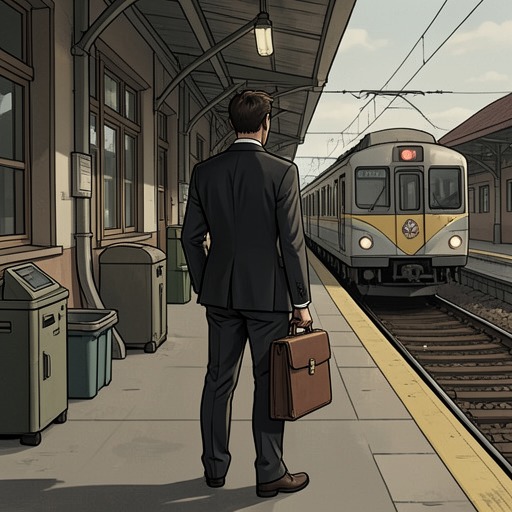
Zoe ultimately calls Bernstein a talking head and tells Lieutenant Martinez that continuing to listen to his profiling opinions will not lead them to the killer. Bernstein’s face reddens; he tightens his jaw, picks up his briefcase, and leaves, slamming the door. The confrontation ends without a response from him that addresses Zoe’s evidence. Tatum Gray watches her with surprise, while Zoe remains calm, treating the clash as the reason she was brought into the meeting.
Narrative Role and Limits
Bernstein’s importance lies less in a developed personal history than in the conflict his profile creates. At first, his institutional and media credentials lend weight to a simple investigative proposition: look for someone connected with a funeral home. Zoe forces that proposition to face details that, in her reading, point toward a novice rather than an established practitioner. The scene makes the method of reasoning itself part of the case: a profile can organize a search, but confidence and professional reputation do not establish that its assumptions fit the evidence.
The later Maynard investigation supplies a separate example of how suspect theories can be built from suggestive but weak details. Police privately identify Manny Anderson as a suspect, citing his isolation, unusual cartoons, and participation in Dungeons and Dragons; Zoe considers that reasoning inadequate and objects that officers dismiss her own carefully researched suspicions. The evidence does not establish that Bernstein shaped the Maynard investigation or had any role in it. Read alongside his earlier prominence, however, that episode echoes the novel’s broader concern with how authority and a plausible-sounding profile can affect whose evidence is taken seriously. Bernstein’s own later actions and ultimate fate are not established in these scenes; his documented arc here ends with his departure from the meeting after Zoe’s challenge.